

[Nagami kumquat]
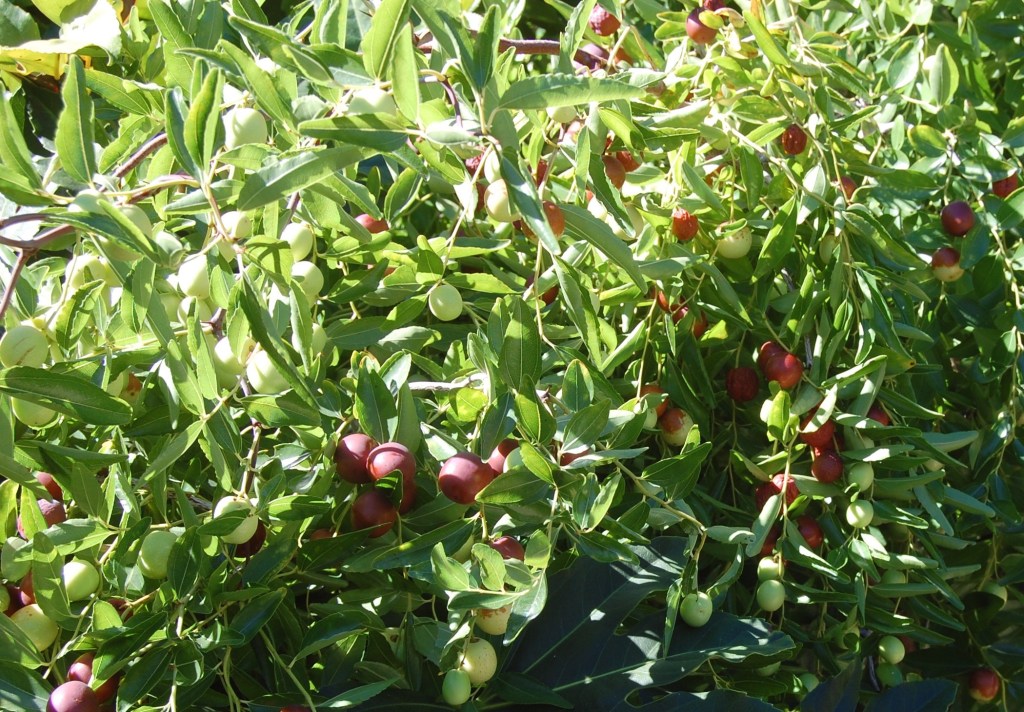
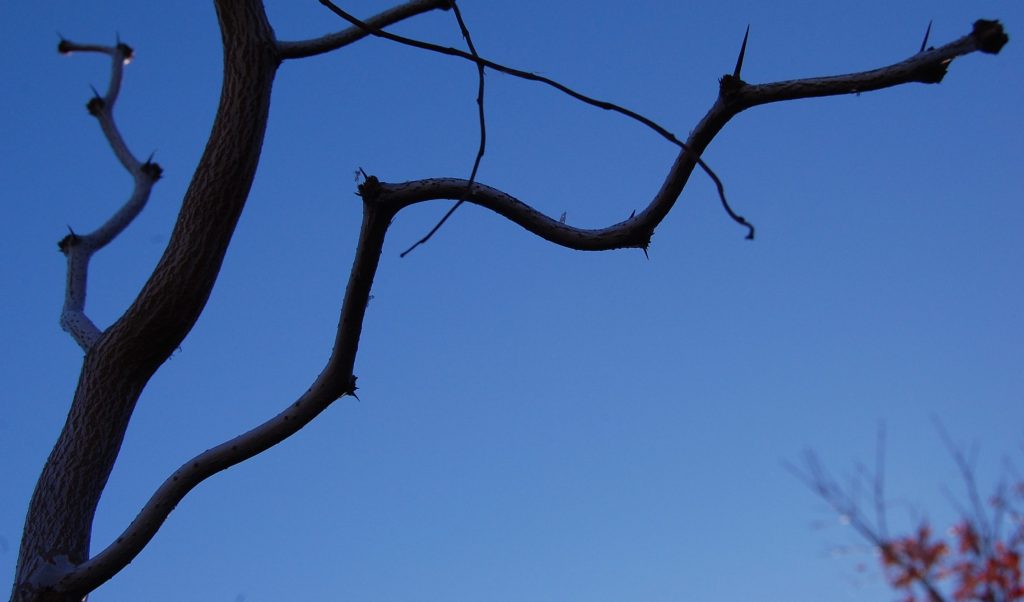
Jujube trees produce Chinese dates. They are edible, oblong red fruit much like palm tree dates although the tree is not a palm. It has been part of Chinese culture for a long time; it was among the fruits excavated from a tomb of the second century BC. There are an estimated four hundred different kinds. The one in my garden is called the Dragons-claw Chinese Date because of the contorted shapes of its branches. In the winter after the leaves have fallen, I like to see these angular branches silhouetted against the sky. Click on an image to see its expanded version.
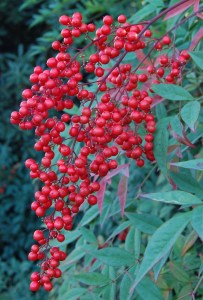
Heavenly bamboo is not a bamboo. It looks similar to bamboo from a distance, but is a woody shrub, not a grass. The heavenly part of its name arose from the ancient practice of using it to decorate altars. In winter, it forms bright red berries appropriate for any holiday of the season.
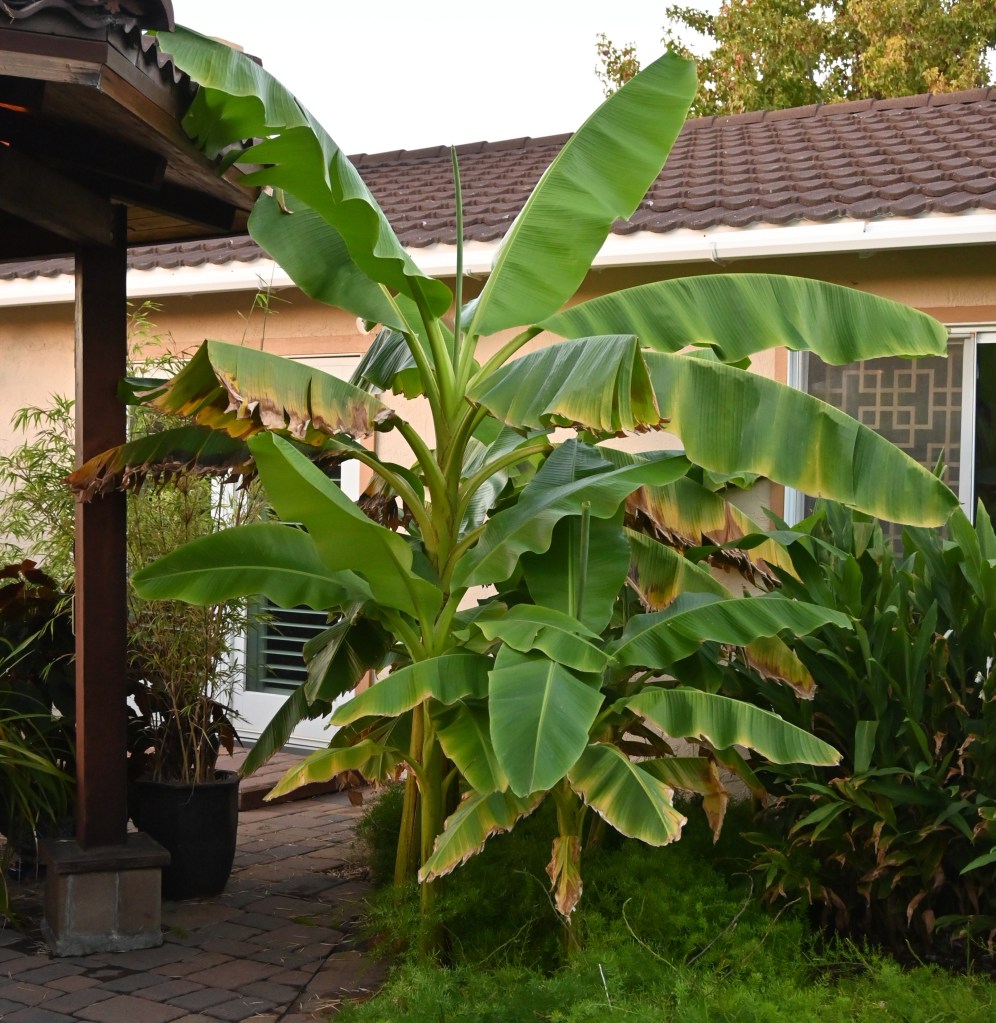
Bananas were often planted near doors and windows in China. Inside the house, the deep jop jop jop sound of water striking their broad leaves provides a pleasant change from the rushing noise of summer showers. There are no summer showers in California, but I planted bananas near doors and windows just because I like to look at them. Their broad leaves add tropical lushness to the garden.
The weeping snow fountain cherry tree by the pond presents an exclamation point to the foliage changes wrought by the seasons. With no edible fruit, it is dramatic by just standing still.
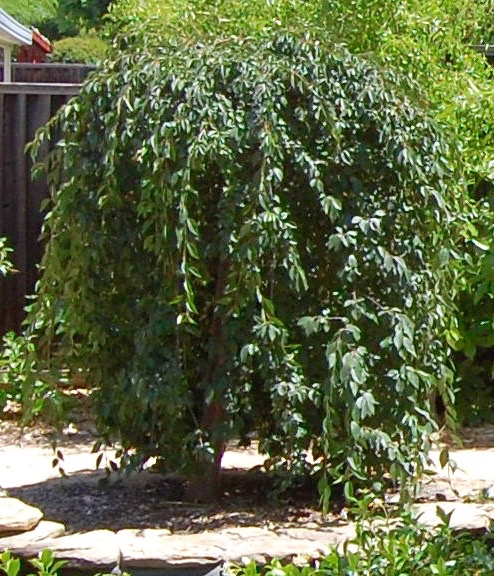

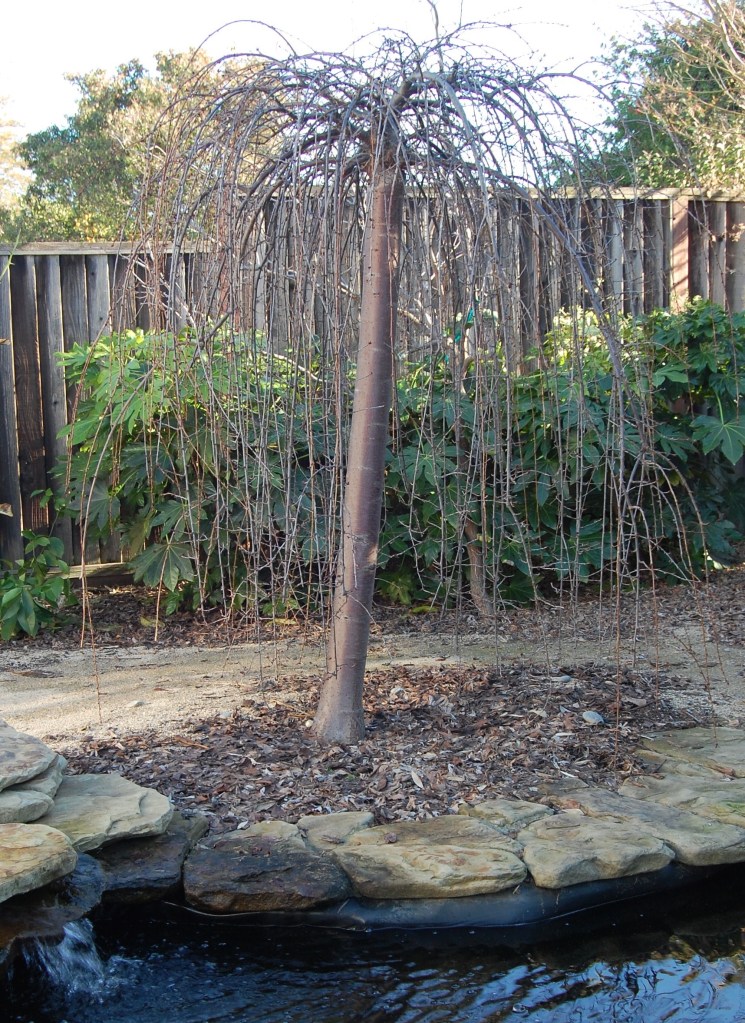
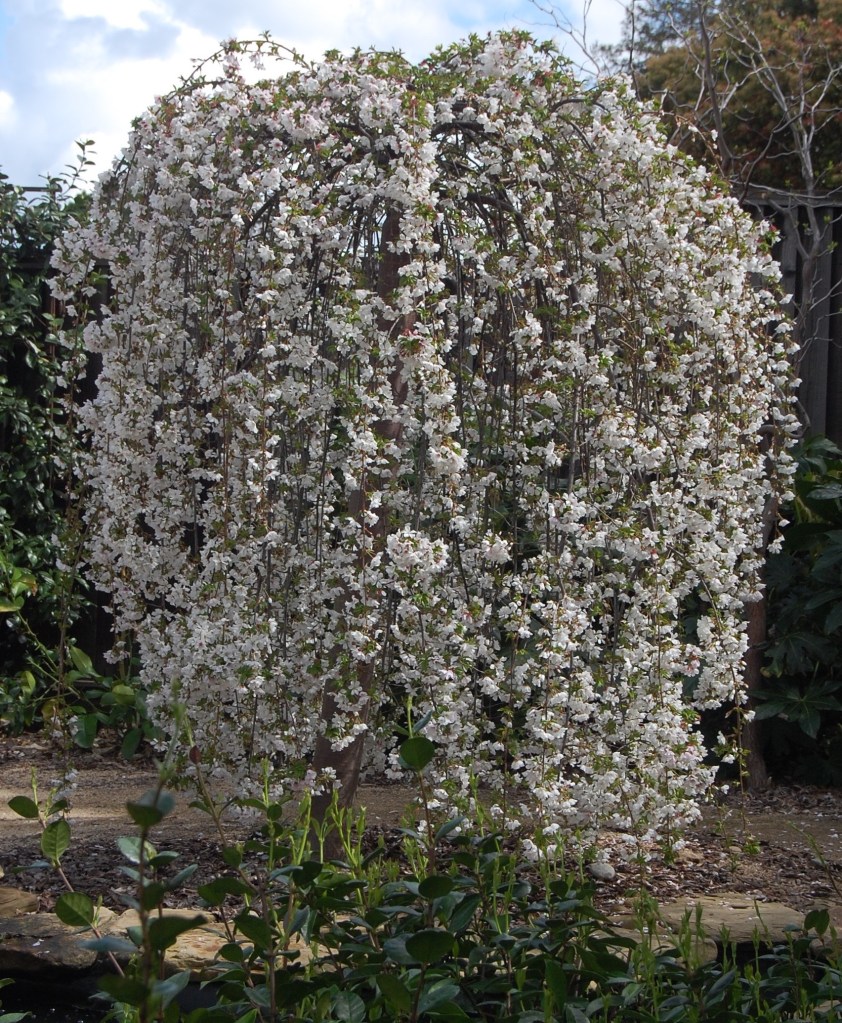
Over thirty varieties of plants grace my garden. Almost all of them have botanical origins in Asia, although they obviously are readily available in California. I list below my garden plants with their common and scientific names. Most of them can be found in gardens in China.
| Garden Plants | |
| Common Name | Scientific Name |
| Aralia, Japanese | Fatsia japonica |
| Bamboo | Phyllostachys bissetii |
| Bamboo | Pseudosasa usawai |
| Bamboo, chocolate | Borinda fungosa |
| Bamboo, heavenly | Nandina domestica ‘Moyers Red’ |
| Banana | Musa basjoo |
| Cherry, Weeping Snow Fountain flowering tree | Prunus x subhirtella ‘Pendula’ |
| Cymbidium | Cymbidium spp., mixed forms |
| Fern, asparagus | Sprengeri asparagus densiflorus |
| Gardenia | Gardenia augusta ‘Mystery’ |
| Ginger, white | Hedychium coronarium |
| Ginkgo | Ginkgo biloba ‘Autumn gold’ |
| Honeysuckle | Lonicera japonica ‘Halliona’ |
| Jasmine, star | Trachelospermum jasminoides |
| Jasmine, true | Jasminum sambac ‘Mysore Mulli’ |
| Jujube tree | Zizyphus jujube ‘Contorta’ |
| Kumquat, Nagami | Fortunella margarita |
| Lemon, Improved Meyer | Citrus x meyeri |
| Maple, Japanese red | Acer sp. |
| Olive, sweet | Osmanthus fragrans |
| Olive, sweet | Osmanthus fragrans ‘Aurantiacus’ |
| Peony, tree | Paeonia suffruticosa(Luo Yang Hong – rose form) |
| Peony, tree | Paeonia suffruticosa(Tong Yun – chrysanthemum form) |
| Pine, Japanese black | Pinus thunbergii |
| Pittosporum | Pittosporum tobira |
| Plum, elephant heart | Prunus salicina |
| Plumeria | Plumeria rubra |
| waterlily | Nymphea ‘virginalis’ |
| waterlily | Nymphea ‘pink passion’ |
| Wisteria, Chinese | Wisteria sinensis ‘Alba’ |
 Clifford Hui's Chinese Garden
Which is the one that smells of orange blossoms with an edge?
P.S. just finished reading “Inside Out.” Relly enjoyed it.
LikeLike
The plant that smells like orange blossoms with an edge is the Pittosporum. It can grow to 15 feet so makes a good barrier plant. Its wood is soft so can be easily pruned to size and shape.
I’m glad you liked “Inside Out.” The research project in it was a real one. A friend of mine worked on it as a post-doc.
LikeLike